How Machines "Dream"
To catch an AI, you must think like an AI. We start by deconstructing the diffusion process—the mathematical magic that turns static noise into photorealism.
The Diffusion Process
Imagine you have a clear photograph, and you slowly add static (noise) to it until it's completely unrecognizable. AI training does this in reverse. It learns how to take pure static and "denoise" it step-by-step until a clear image emerges.
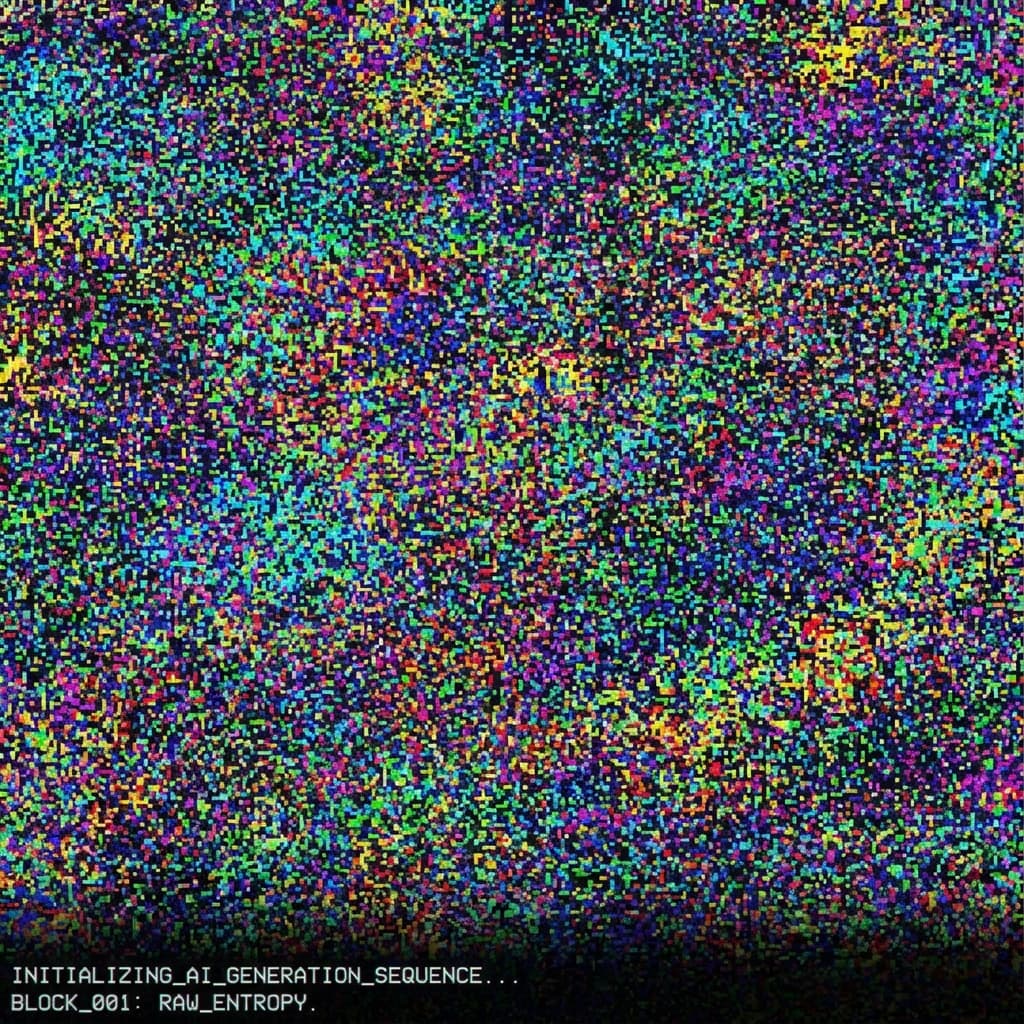
01. Pure Noise
The AI starts with random pixels. It has no idea what it's making yet—just a field of chaos.
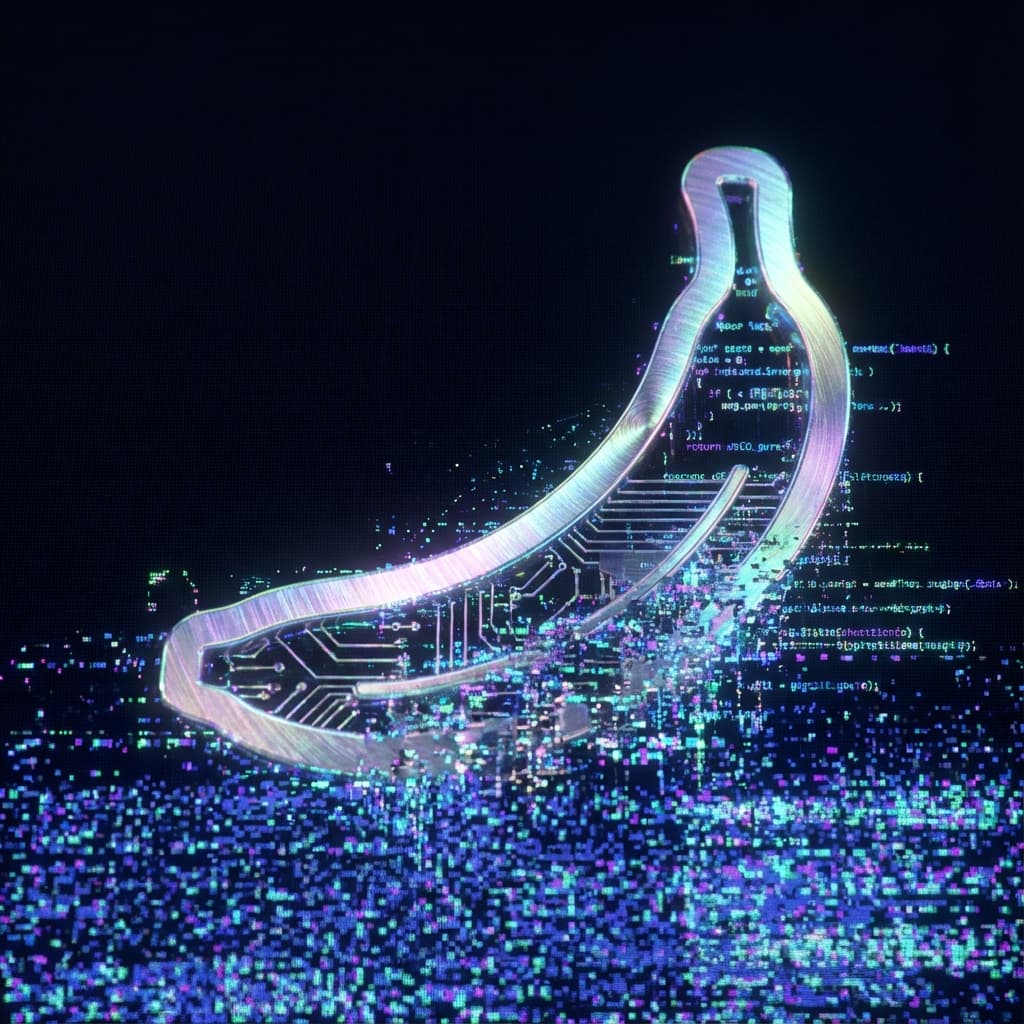
02. The Suggestion
Guided by your prompt ("Banana"), it starts hallucinating shapes that *might* be a banana within the noise.
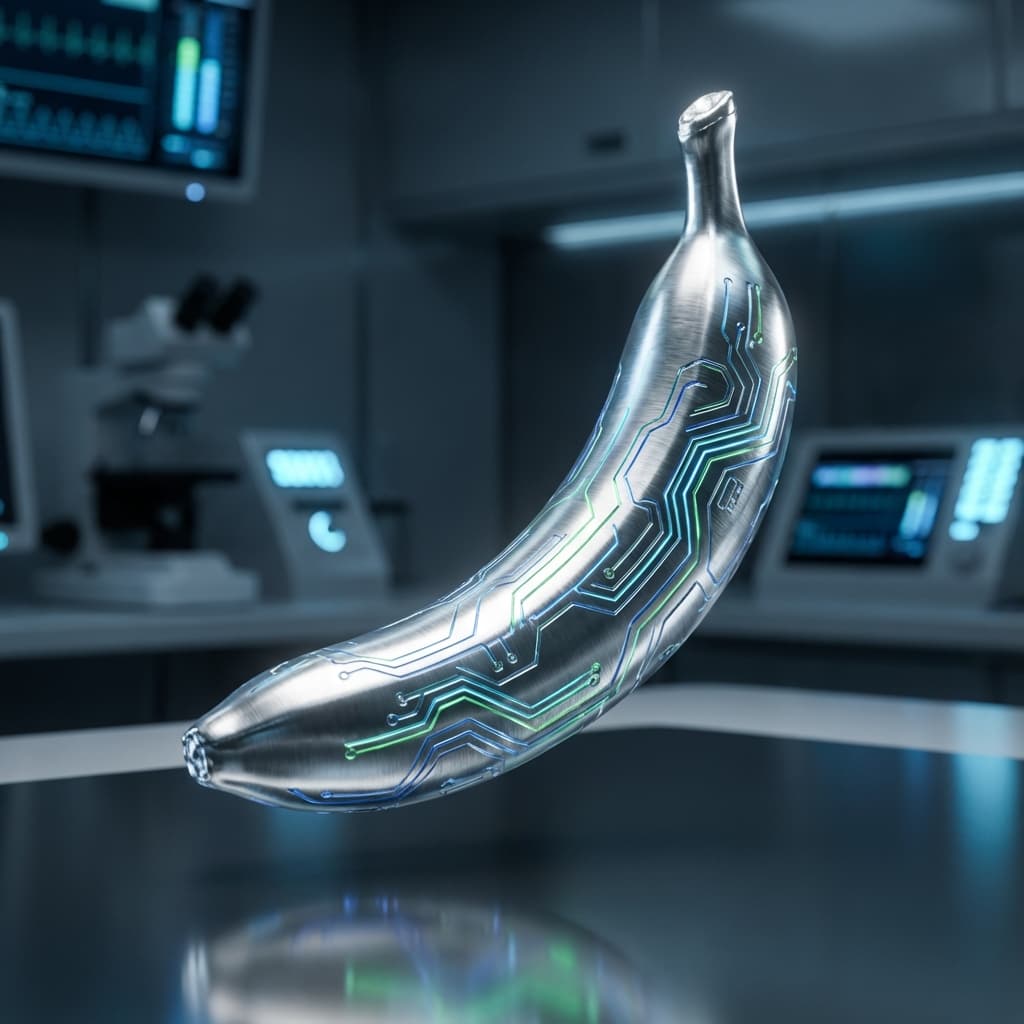
03. Convergence
The final details lock in. Textures, lighting, and reflections are "painted" on in the last few steps.
Latent Space
AI doesn't store images; it stores *math*. This mathematical representation is called "Latent Space." Imagine a 3D map where "Dog" is at coordinate [10, 5, 2] and "Cat" is at [10, 5, 3]. They are close because they are similar concepts (furry, pets). "Toaster" is far away at [50, 80, 0].
When you ask for a "Dog-Cat Hybrid," the AI just navigates to [10, 5, 2.5]—the space between them.
Why this matters for detection:
Because AI relies on "statistical closeness," it often blends concepts that shouldn't be blended. This is why you see Latent Bleed—like a coffee cup made of fur. The AI got the coordinates for "Coffee" and "Dog" mixed up.
This isn't a texture glitch; it's a conceptual failure, and it produces some of the most reliable tells: an astronaut's gloves turning furry next to a teddy bear, a "muscle car" growing organic veins, a sandwich inheriting its holder's fur. When an object has the material properties of its neighbor, you're looking at latent space, not reality.